It's Not The Platform, It's The Message
Making marketing make sense

chuttersnap
This article was originally published in 2017 and is being republished in relation to Firestarter.
the Reykjavik Music Accelerator where we sent one of our own to be a mentor.
Marketing
it shouldn't be so overwhelming
The point of this post is to show that the message is more important than the platform. Being aware of what message the customers receive trumps where they receive it.
There are a lot of articles that keep telling us that 'unless we're doing [insert marketing activity here]' at least three times a week we might as well just close up shop.
It can be stressful and overwhelming to be constantly on the receiving end of these messages. We don't like being stressed and overwhelmed. So we decided to explain marketing. More importantly what marketing does. Because it's not that complicated.
Marketing is simply what happens when a business talks to its customers.
That's it. So why does a business need to talk to its customers? It is pretty much always for three reasons:
- to build their brand
- to create interest in their product
- to drive sales
That's It – How?
how I hear you ask
1. Building a Brand
branding, branding, branding – it's all about branding
Building a brand is either telling people, or reminding them, that a product or a personality exists. The reason Coke spends $1 billion per year on advertising, is so when we think of a soda, we think of Coke. Trust in brands comes from our familiarity with it, and trust leads to profit (read more about that here).
P&G's Thank You Mom campaign was not promoting one specific product, nor asking anyone to buy anything. It was done entirely to strengthen the P&G brand, that most people already know. By building trust in the product, the next time someone needs a toothbrush or a deodorant, they'll be more inclined to go for a P&G product.
The message P&G conveyed was 'we care about moms' – who are the biggest buyers of P&G products. The estimated result of this campaign (that is publicly available) is a sales lift of $500 million worth of P&G products.
There is a relationship between people's trust in brand and profit.
(Read more here)
2. Creating Interest
leave us gaaaaaagging
Creating interest in a product, is the same as increasing demand. It's making people want something. This is very often done before the product is available, so when it hits the shelves people already want it, and go out to buy it right away.
It's like a movie trailer. Looks amazing, right? Too bad the feature isn't out for another six months. It makes us want it more because we can't have it now. It creates demand. And demand means sales.
It's impossible to watch that amber Jurassic Park trailer, and not be dying to see the movie – even for those of us that have already seen it.
The message from the teaser trailer for Jurassic Park is 'it's gonna be AMAZing'. This teaser trailer is so rememberable, people are still talking about it, 23 years later.
Successful hype, or consumer interest, means that people have already decided in their minds to buy the product in question. By creating interest, demand has been established.
3. Driving Sales
it takes balls – can you do it??
Driving sales is putting a product in front of people – and asking them to buy it. It is the job of marketing to tell anyone who'll listen, what products are available to buy and ask them to buy it.
It may sound too obvious to work, but these are the 'Buy Now' buttons online and banners in the grocery store. Ever gotten back home from the supermarket with some random product you had no intention of buying? Odds are they were on a specific promotion, either reduced price or on a prominent stand in the shop.
People can't buy something they don't know about. The best way to drive sales, is telling people what to buy, and then when and where to buy it.
It's easy to recognise any campaign that is driving sales, because it tells the audience what to do. In the Dollar Shave Club video, it's "visit dollarshaveclub.com", the website where their product (razor blades) are sold.
The message in the Dollar Shave Club video was 'buy your razors from us because they're cheaper'. They signed up 12,000 customers in the first 48 hours after the video went live. The success from this first campaign put the company on the map, and it got sold last month for $1 billion.
Driving sales means telling the audience exactly what to do.
Any platform can communicate any message.
It's not the platform that determines the success of the campaign, but how powerful the message is.
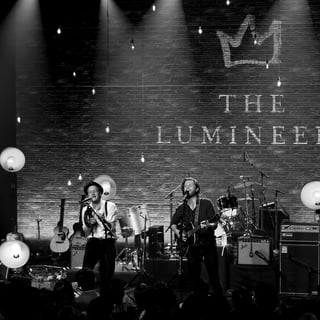
See how three separate Facebook posts, posted by the same band
within one month convey three different messages:
1. Building a brand, 2. Creating Interest, 3. Driving Sales.
How Is This Useful?
Instead of thinking about where we should be posting, what we're posting is much more important. If we're still not sure about the difference, here are three question we should be asking ourselves whenever we're interacting with our customers or audience:
1) Am I asking people to do a specific thing (driving sales)?
– If yes, make sure what you're asking them is very clear: What are they buying, how much does it cost, and where do they go buy it?

In this post, there's an image of the product, they're told to buy now (or they'll miss out since it's a limited print), and it says very clearly "purchase here". It's very clearly a post intended to drive sales. The message is "buy this album".
That's driving sales. Telling people to buy [this product].
2) If no, am I creating hype for a product that isn't out yet (creating interest)?
– If yes, we want to go for something that is amazing or irresistible. Something that builds excitement.

"That was the best one yet" says the producer casually. Watching this clip makes hearing the rest of the album almost feel necessary. It's irresistible. This post is to create interest. The message is "the album (that isn't out yet) will be really good".
That's creating interest. Getting people excited about something that isn't available to them yet.
3) If no, you're reminding people that you exist (building the brand)
It doesn't even really matter what you're posting or sharing. Our recommendation? Share something your audience will enjoy.

All this post is, is a pretty photo. It's enjoyable. No one is expected to do anything, except maybe like it. But it's not necessary. Notice how this image has 9x more likes than the other ones. Because the audience genuinely likes it. Because Amsterdam. Who doesn't like Amsterdam?
That's brand building. Reminding people we exist. Preferably in a nice way.